ABBOTSFORD
ABBOTSFORD
Originally a two-bedroom, one-bathroom arrangement typical of its era, this Abbotsford workers cottage has been reworked into a three-bedroom, two-bathroom home on a single level. Such arithmetic can seem reductive, numbers as proof of progress, but here the expansion was less about yield than about re imagining how a family might inhabit a constrained footprint. The clients brought with them memories of international living, of apartments in dense cities where every square metre is compelled to justify itself. Efficiency, in those contexts, is not a capitalistic preference but a cultural condition.
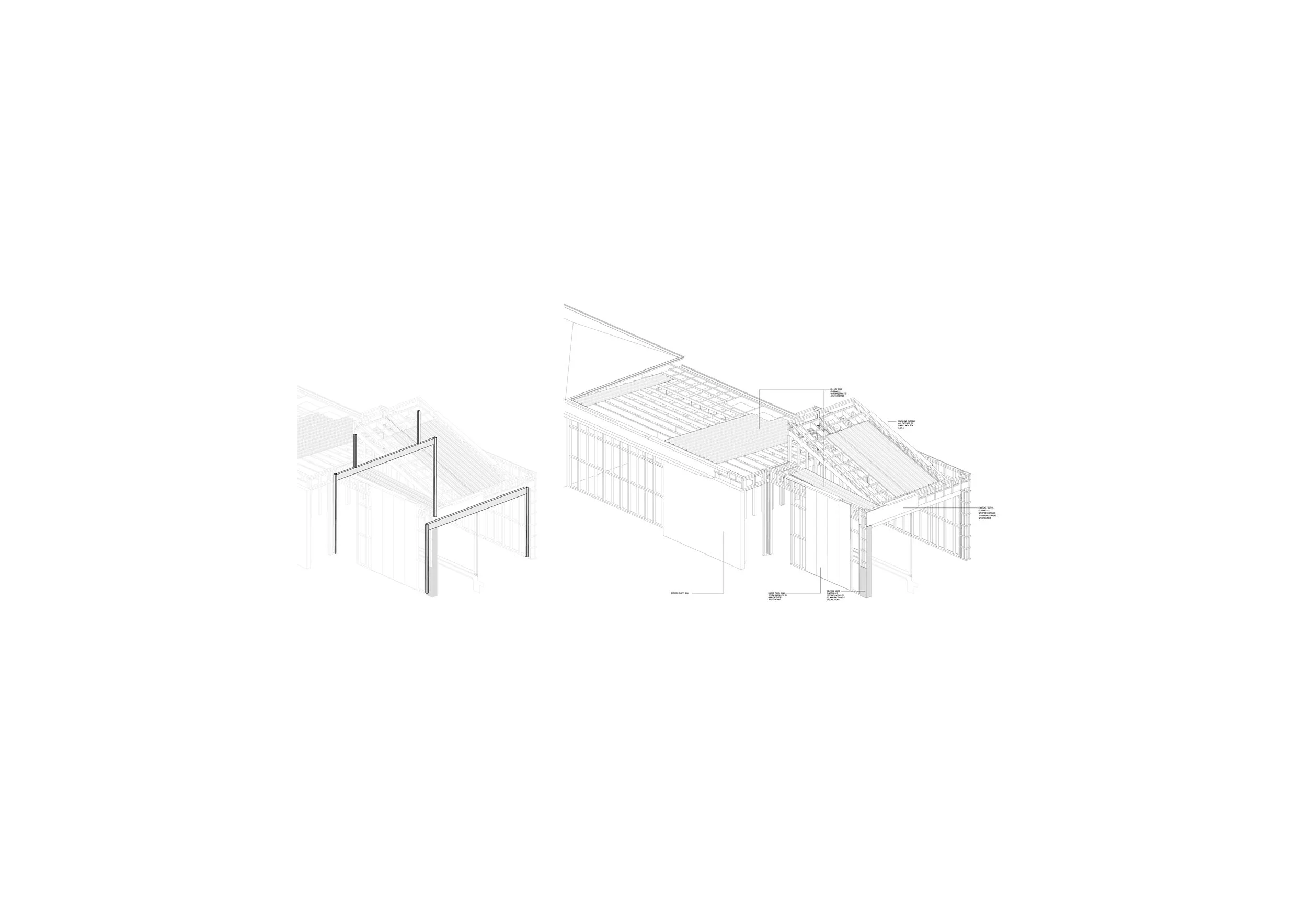
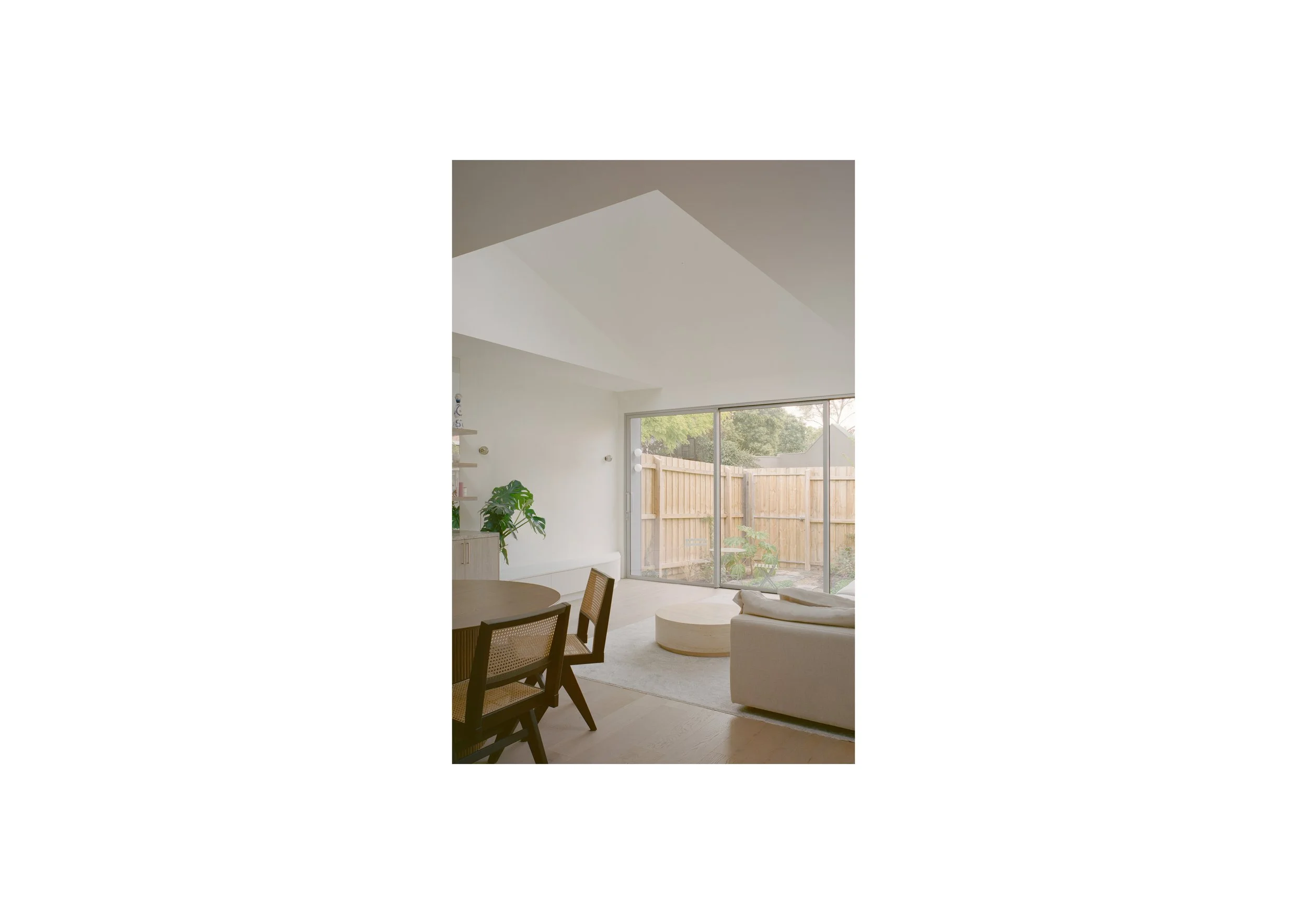
I married these ideas with my experience in commercial planning to devise a compact, precise domestic plan. Thresholds compress and release, services overlap in function. The result is a house that feels considered rather than crowded, a hyper-rational composition of proportions and functional devices.
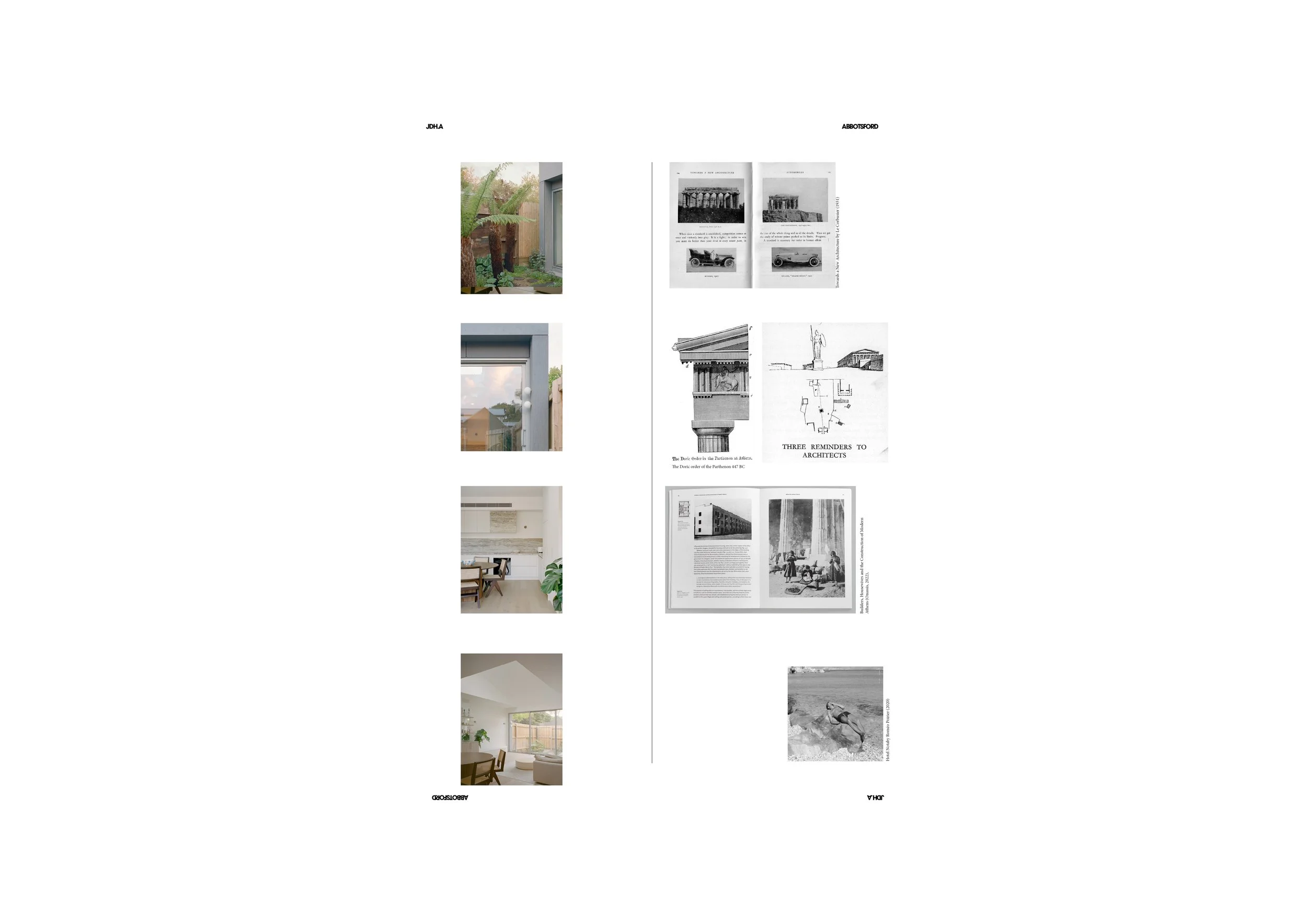
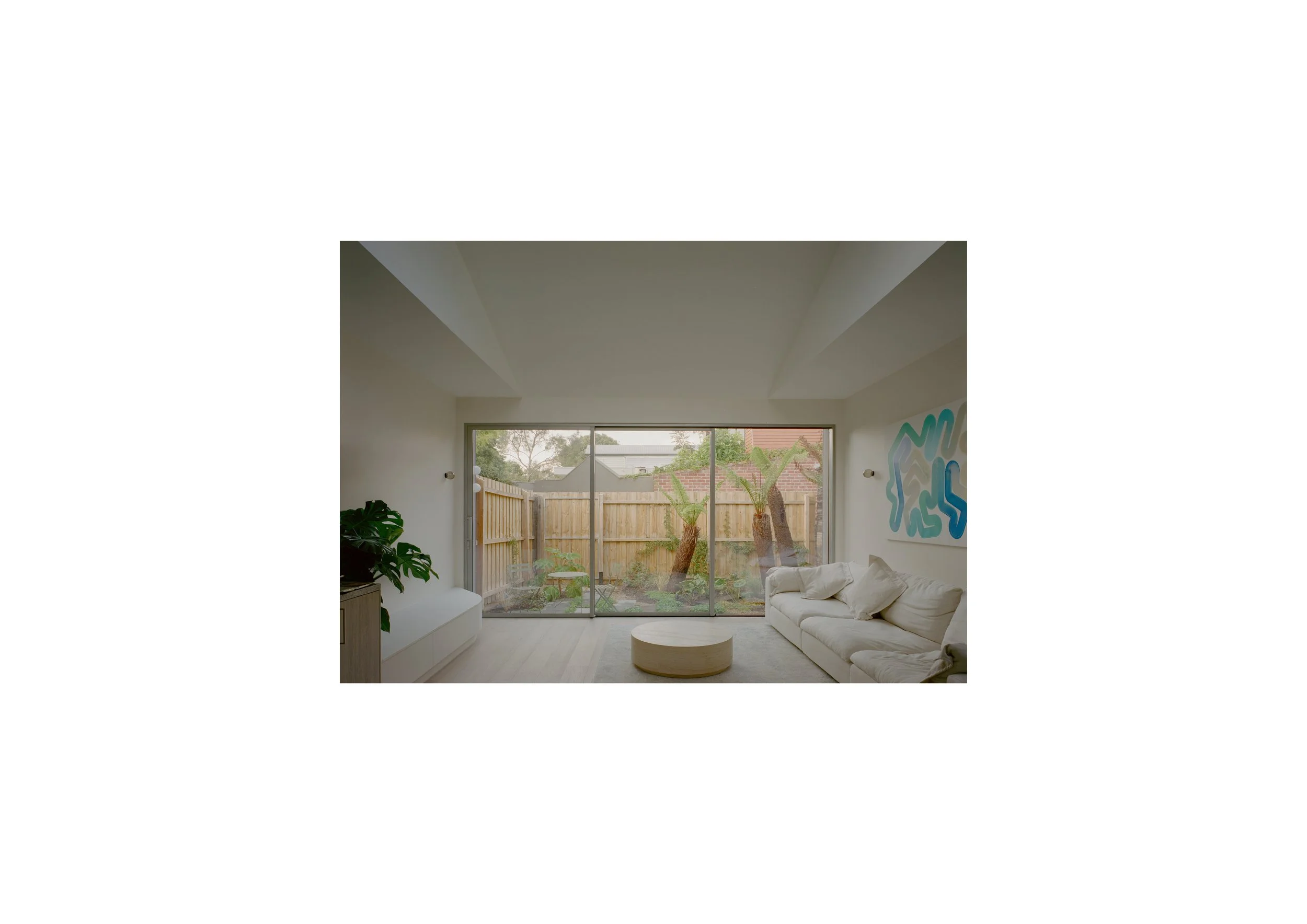
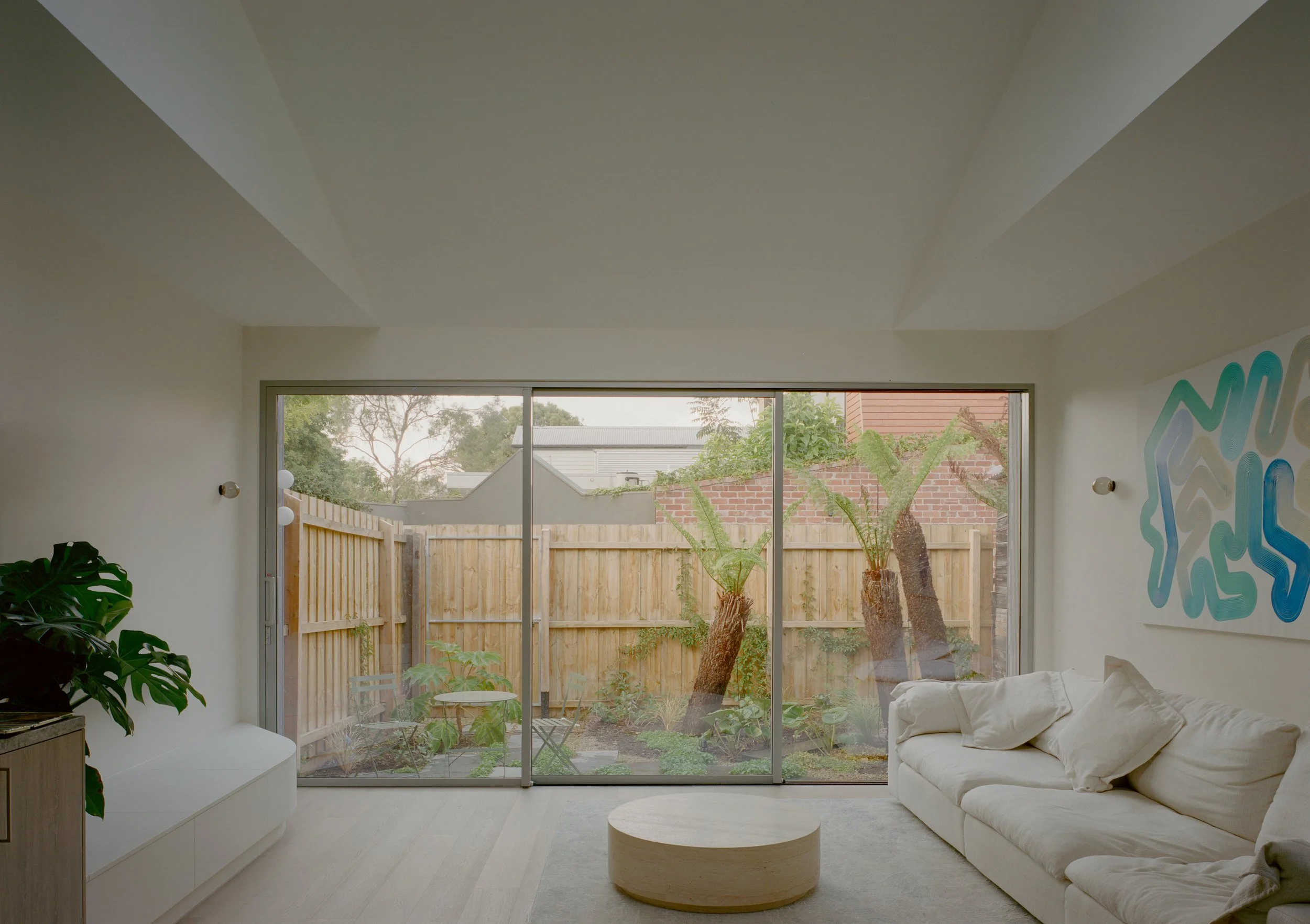
The south-facing orientation made the original house very dark. To counter this, a series of carefully placed devices were introduced: a pitched roof plane angled to capture northern light from above and internal apertures that allow illumination to travel deep into the plan. Rather than relying on a single dramatic gesture, the strategy is cumulative, light borrowed is filtered and reflected. The project drew consciously upon the twentieth-century proposition, articulated most famously by Le Corbusier, that the house should be understood as a machine for living.
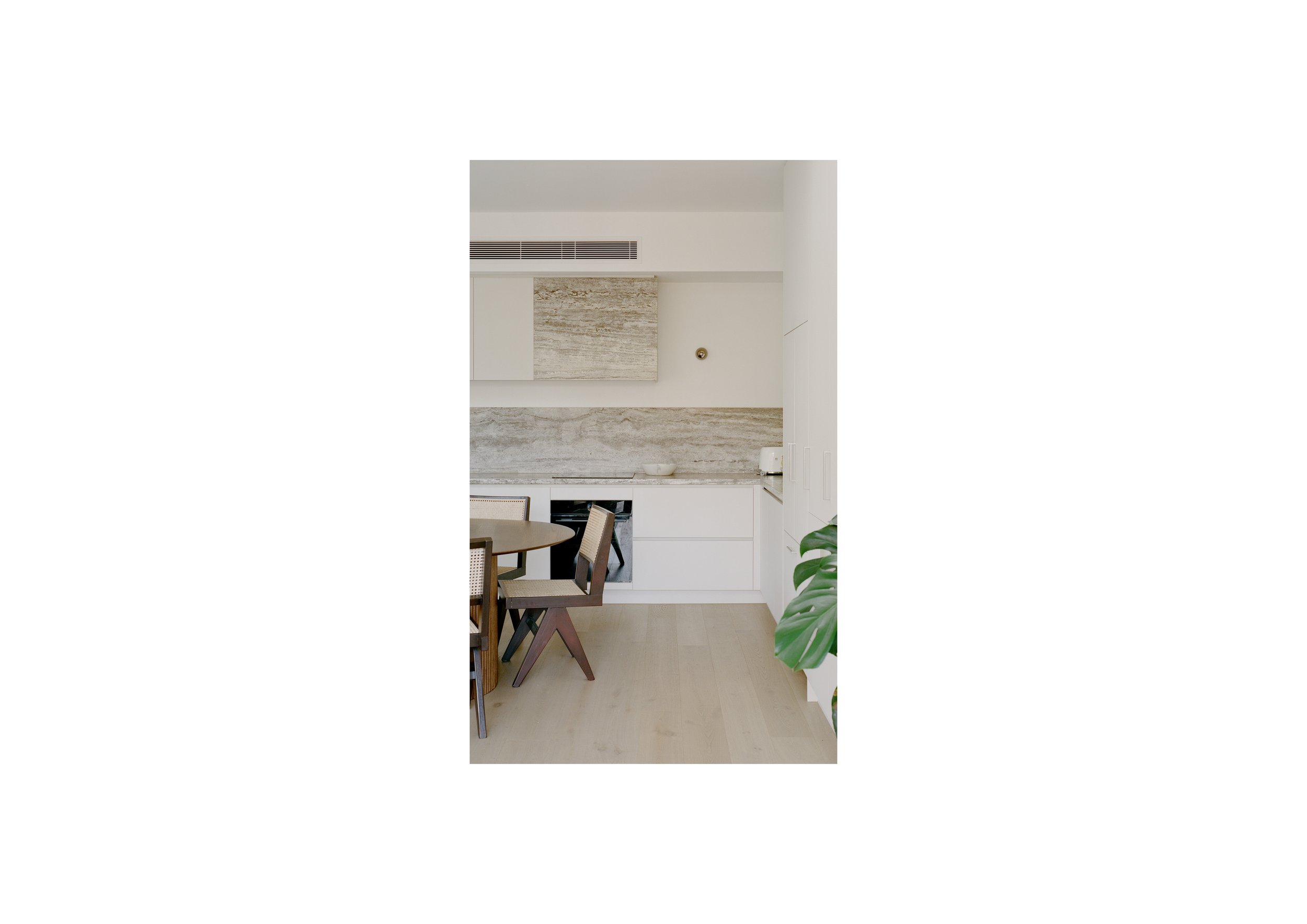
Within this hyper-rational composition, certain moments break through the order. Textured, weathered stone appears in thresholds and surfaces, its irregularity recalling the worn travertine of Athenian streets. The material carries with it a sense of duration and erosion, a reminder that architecture, however exact, is ultimately subject to touch and weather.
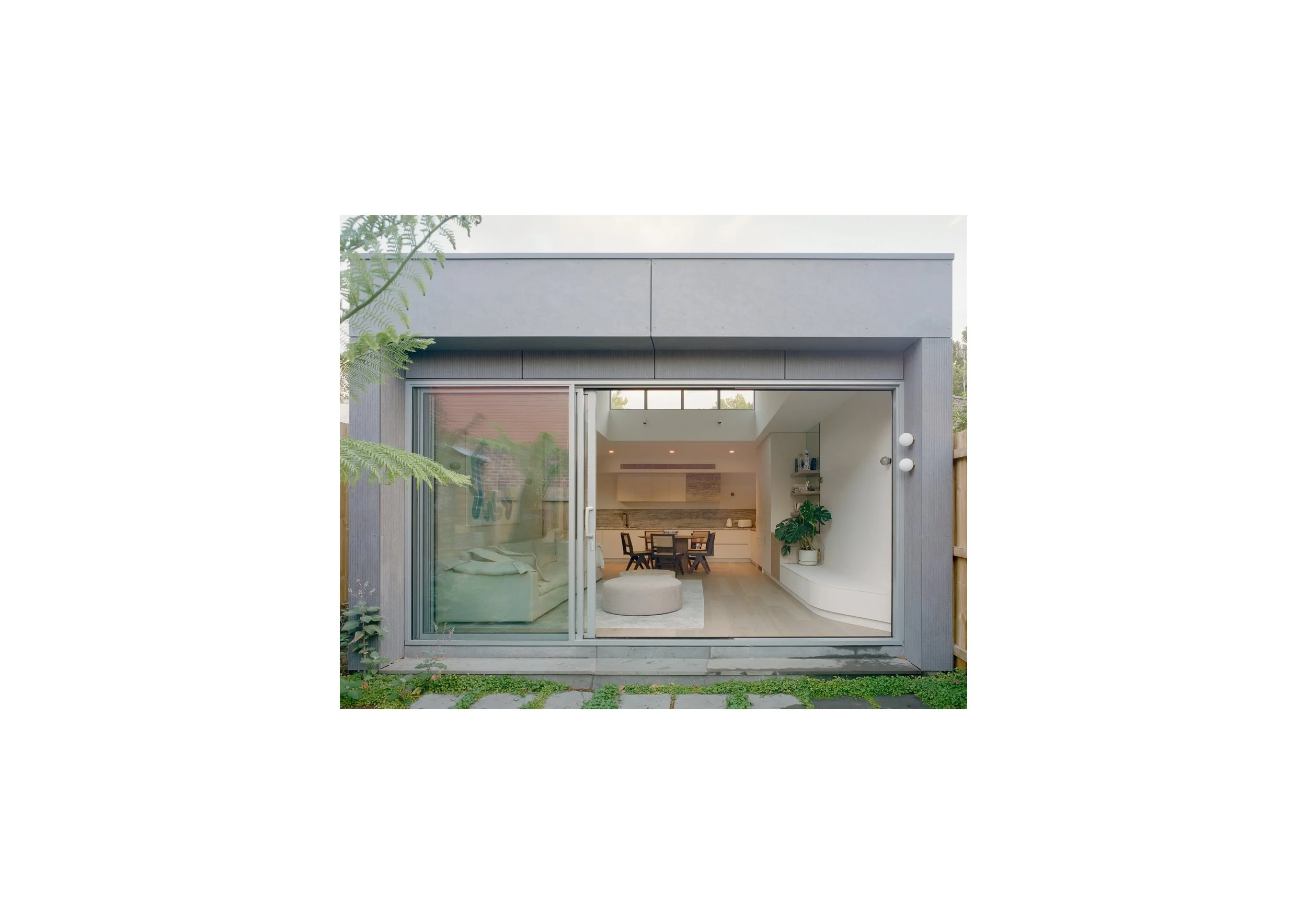
At the rear façade, a gentle nod to the Doric order emerges, (hopefully!) not as pastiche, but as proportion and rhythm. It is an allusion subtle enough to remain unnoticeable, yet present in the measured spacing and tectonic clarity. Such references acknowledge that even the most ardent modernists were never entirely divorced from antiquity. Le Corbusier himself travelled to the Acropolis and wrote with reverence of its forms, finding in classical architecture a discipline of proportion and mass that underpinned his own radical work.
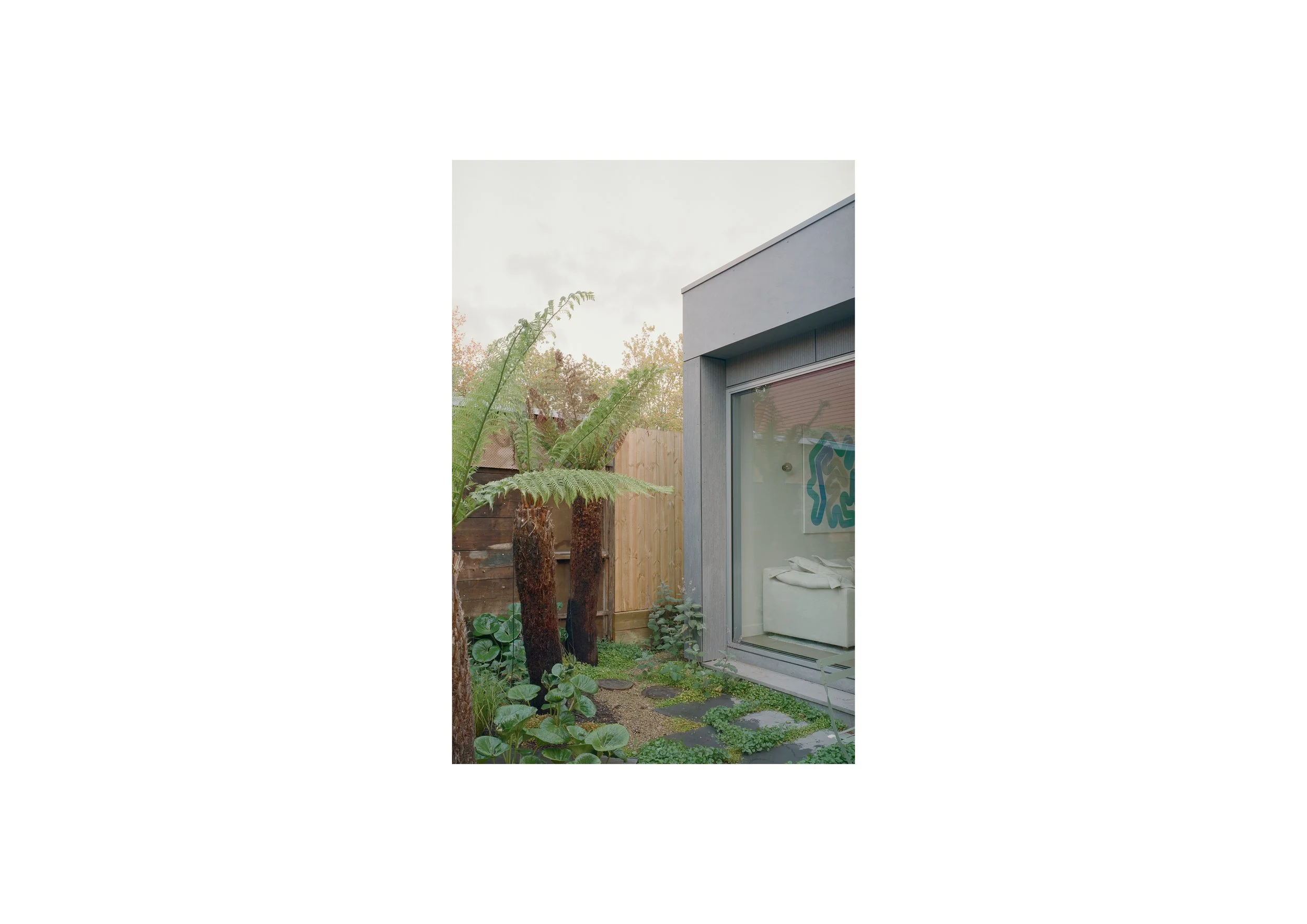
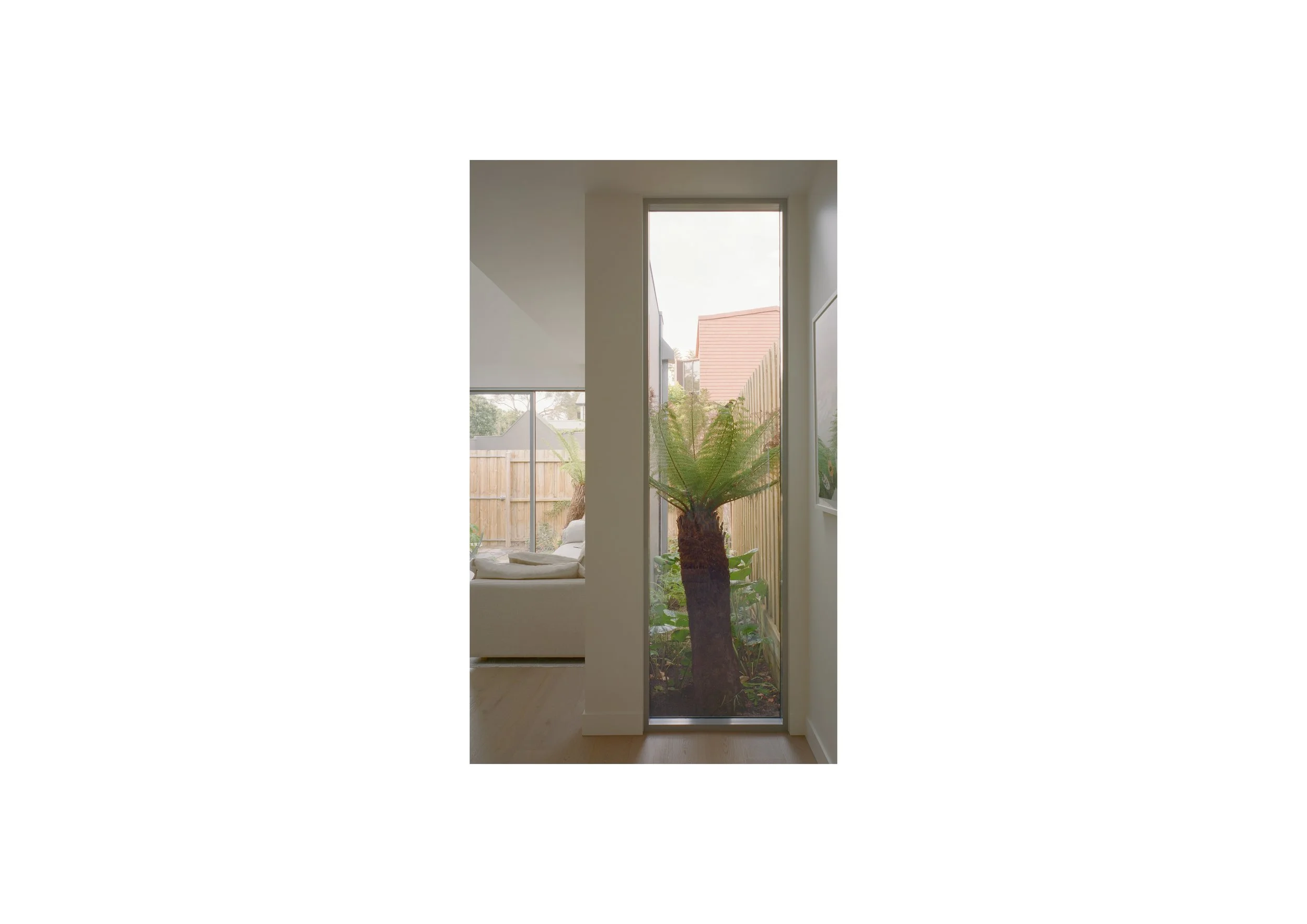
Against this rational order the fern garden introduces a note of naturalistic disorder, a softening of the edges that relaxes the interior’s measured logic. Growth appears un-programmed. It brings a palpable connection to nature.
Seen from within, the contrast is deliberate and restorative: a finely tuned apparatus for living beside a space for breathing. The rational interior frames and contains daily life, the garden unsettles it, reminding its occupants that beyond proportion and performance there remains something unruly. It is in this tension between machine and nature, precision and profusion that the small cottage now exists.
Location: Abottsford, Melbourne.
Completed: September 2025
Project Team:
Architect - James Harbard
Builder - CDK Building Group
Engineering - Clive Steele Partners
Landscape Design - Urban Meadows
Landscape - Avoca
Photographer - Pier Carthew